

Bouchard Père & Fils is one of those names that carries Burgundy history in the same breath as Burgundy authority. Founded in 1731 and now reshaped under Artémis Domaines, the house remains a major reference point for grand cru Chardonnay and Pinot Noir, with holdings that still matter not just because of scale, but because of the clarity of the wines themselves.
A house built on Burgundy history
Few Burgundy domaines can claim a lineage as long as Bouchard Père & Fils. The estate was founded in 1731 in Beaune by Michel Bouchard, and over the centuries it expanded into one of the largest and most recognizable vineyard owners in the Côte d’Or. That long history matters, but not as a museum piece: Bouchard has always been a working estate, continuously assembling an enviable portfolio of sites across the Côte de Beaune and Côte de Nuits.
The modern chapter is equally important. In 2022, Artémis Domaines took control of Bouchard Père & Fils, and by 2023 the estate had withdrawn from en primeur and stopped its négoce activity to focus on estate-grown wines. More recently, the house has been restructured again, with some vineyards and top climats being separated into a new entity, Domaine des Cabottes, while the Bouchard name continues on a substantial portion of the holdings. For collectors, this matters because it means the wines now sit at the intersection of old Burgundy heritage and a much more focused modern strategy.
Why Bouchard still matters today
Bouchard’s importance is not just historical. The house still owns a dense mosaic of highly regarded vineyards, including monopole sites such as Beaune Grèves Vignes de l’Enfant Jésus, Beaune Clos Saint-Landry, Beaune Clos de la Mousse, and Chevalier-Montrachet La Cabotte. That is an extraordinary backbone for any producer, and it helps explain why Bouchard remains relevant whenever great Burgundy is discussed seriously.
The style, when it is at its best, is one of precision, structure and concentration rather than overt flamboyance. These are not wines that need to perform theatrics to be convincing; they tend to show their pedigree through texture, balance and the slow unfolding of detail in the glass.
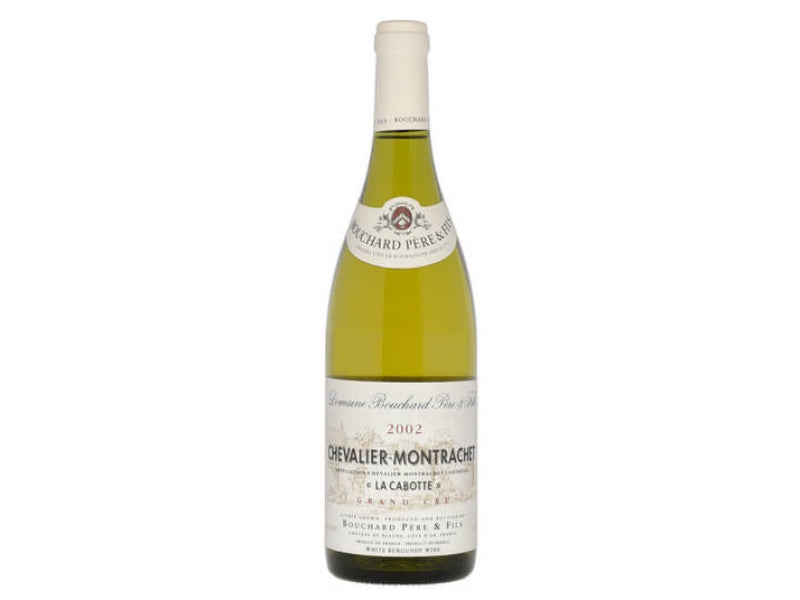
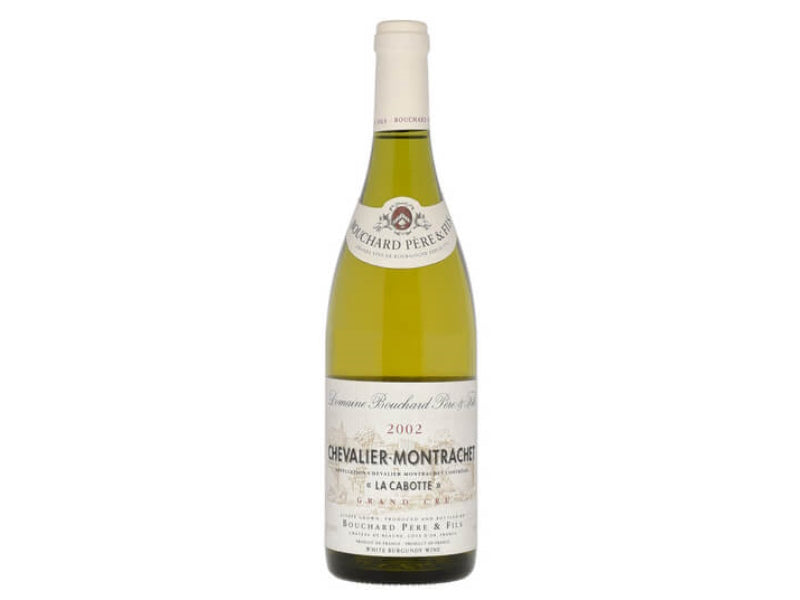
2002 Chevalier-Montrachet La Cabotte Grand Cru: maturity with authority
The 2002 Bouchard Père & Fils Chevalier-Montrachet La Cabotte Grand Cru is the kind of bottle that reminds you why white Burgundy from a great terroir can age with real composure. Producer notes describe a very complex bouquet combining fruit, flowers and a few toasted hints, with the palate described as ample and rich. Other tasting notes from the market emphasize ripe apricot, vanilla, apple and white soil, with the wine starting a little soft before developing intense acidity that carries the finish.
That combination is classic mature Chevalier-Montrachet behavior: the wine is not trying to impress through power alone, but through the way richness, acidity and minerality begin to align with age. In the glass, one expects a wine of breadth and persistence, with floral lift and citrus depth sitting over a more savory, gently nutty frame. A great Chevalier at this age should feel less like a fireworks display than like a piece of architecture slowly revealing its proportions.
For collectors, La Cabotte has always been one of those names that rewards patience. The 2002 vintage adds a layer of reflection to the site’s inherent precision, making this a bottle for people who value mature Grand Cru Chardonnay that has moved beyond primary fruit but has not lost its line.
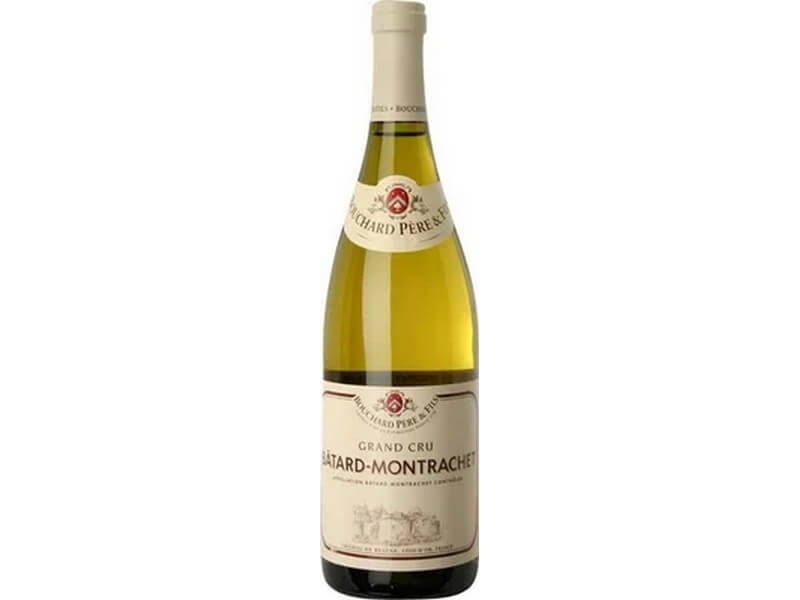
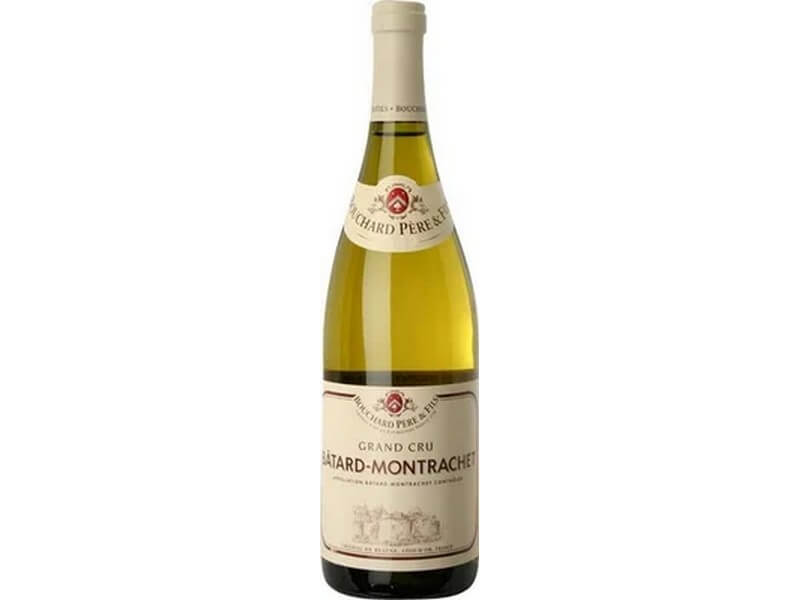
2010 Bouchard Père & Fils Batard-Montrachet Grand Cru: power with restraint
If Chevalier-Montrachet is about finesse and verticality, Batard-Montrachet is where Bouchard’s white Burgundy shifts into a deeper, more muscular register. The 2010 Bouchard Père & Fils Batard-Montrachet Grand Cru comes from one of the most storied white wine climats in Burgundy, and the vintage itself is widely associated with precision, freshness and the kind of tension that helps serious whites age well.
Even without over-dramatizing it, Batard-Montrachet at Bouchard’s level typically shows a more obvious sense of volume than Chevalier: richer fruit, broader shoulders, and a palate that tends to feel more commanding in its middle than delicate at its edges. The best examples marry that power to a clean mineral spine and a finish that keeps the wine from ever feeling heavy. That is the balance people hope for in Batard — intensity without blockiness, richness without fatigue.
In practical terms, the 2010 should be expected to occupy that middle ground between grandeur and structure: ripe orchard fruit, citrus peel, hints of hazelnut and spice, and the kind of savoury persistence that gives white Grand Cru Burgundy its authority at the table. It is a wine for readers who appreciate that Batard can be more imposing than Chevalier without being less refined.
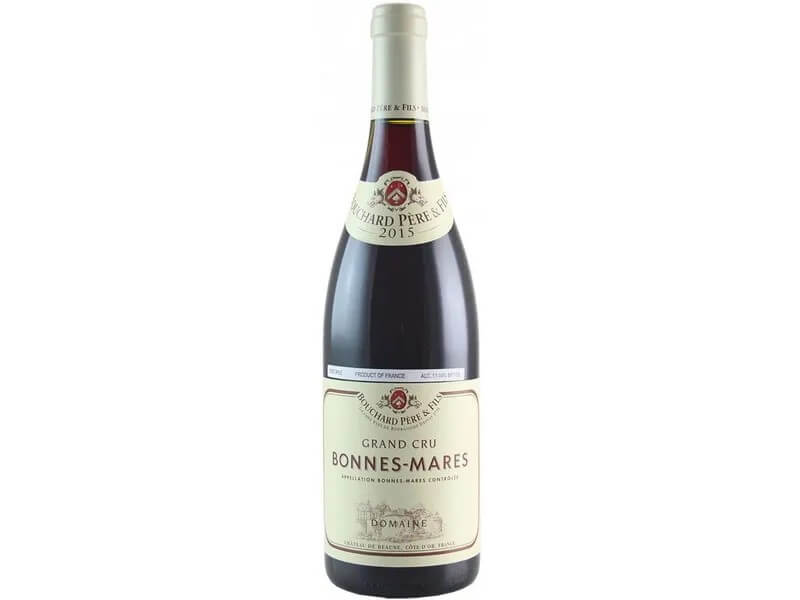
2012 Bouchard Père & Fils Bonnes-Mares Grand Cru: the red that asks for patience
The 2012 Bouchard Père & Fils Bonnes-Mares Grand Cru is a very different proposition: a red Grand Cru that speaks in darker tones, with structure and aromatic complexity leading the way. Producer tasting notes describe a remarkably refined bouquet of fruit and spices combined with a hint of oak. Another market note calls the wine a compelling example of the vintage’s personality, with the kind of depth that makes Bonnes-Mares such a difficult but rewarding site.
Bonnes-Mares is never a wine that flatters you immediately. It usually arrives with more seriousness than seduction, more frame than gloss. At its best, it combines dark cherry, wild berry, rose, underbrush and spice with a taut, mineral backbone that becomes more expressive with air and age. The 2012 vintage, depending on the domaine, can show a distinctly structured profile — and Bouchard’s style often reinforces that sense of line.
What makes this bottle especially interesting is that it comes from a house better known in many collectors’ minds for white Burgundy, yet Bonnes-Mares reminds you that Bouchard’s red-wine side deserves equal respect. This is not a wine to be rushed. It should be treated as a Grand Cru that may still have more to say, especially if opened in the right context and given enough air.
What ties these three wines together
Although the three wines are different in grape, site and stage of life, they share a common Bouchard signature: serious terroir, measured winemaking and a style that favors structure over noise. In the 2002 Chevalier, that means mature complexity and a long, mineral finish. In the 2010 Batard, it means authority and breadth. In the 2012 Bonnes-Mares, it means dark fruit, spice and a frame built for aging.
That consistency is part of Bouchard’s enduring value. The house may have changed ownership and corporate shape, but the wines still offer a clear line back to Burgundy’s grand classical tradition. For collectors, that is reassuring: these are not wines that need interpretation beyond what the vineyard and vintage already provide.
A sommelier’s view
If I were placing Bouchard on a serious wine list, I would think of it as one of Burgundy’s great reference houses for drinkers who like their grand cru wines to speak plainly and age properly. The charm is not in novelty. It is in the fact that these wines still carry the weight of site, the discipline of a major historic estate, and the ability to unfold with time rather than exhaustion.
The 2002 Chevalier-Montrachet La Cabotte is the most immediately eloquent of the three for a mature white Burgundy drinker. The 2010 Batard-Montrachet is the most commanding. The 2012 Bonnes-Mares is the most reserved at first, but perhaps the one that most clearly rewards contemplation. Taken together, they show why Bouchard Père & Fils remains a name worth taking seriously.
Sources: Bouchard Père & Fils official history, producer tasting notes for 2002 Chevalier-Montrachet La Cabotte and 2012 Bonnes-Mares, estate and trade coverage of ownership changes and restructuring, and market tasting notes for the 2002 La Cabotte.
Picture: AI generated