

Our next 2025 Bordeaux futures release at Symbolic Wines leans hard into the estates that are already shaping the narrative of this five‑star, low‑yield vintage: Smith Haut Lafitte (red and white), Troplong Mondot, Clos Fourtet, Beauséjour Bécot, L’Eglise‑Clinet, Haut‑Brion (rouge and blanc), Vieux Château Certan, Figeac, La Conseillante, La Mondotte, La Violette, Ducru‑Beaucaillou, Pichon Baron, Léoville Las Cases, Château Montrose and the full Château Margaux trio (Grand Vin, Pavillon Rouge, Pavillon Blanc). These are the names the trade and critics are already calling out as reference points, and they are exactly where we believe long‑term collectors and investors should be looking in 2025.
2025 in context: a low‑yield, five‑star Bordeaux launched into a turning market
Independent reports on Bordeaux 2025 now converge on a few key points: it is a low‑yield vintage, qualitatively at or near the top of the modern era, and it arrives just as the three‑year fine‑wine correction is giving way to a new, more selective upturn. WineInvestment.com’s Bordeaux En Primeur report describes 2025 as a “five‑star vintage,” stressing that a hot, dry summer followed by perfectly timed late‑August rain produced wines with depth, freshness, polished tannins and more moderate alcohols than some recent heat peaks.
WineCap characterizes Bordeaux 2025 as a “low‑yield, heat‑shaped vintage” where precision viticulture allowed the best estates to deliver concentration without excess, and warns that the campaign is unfolding in a market still at a crossroads after several years of price declines. In parallel, Vinetur’s April 2026 analysis shows fine‑wine prices rebounding sharply in early 2026, with Burgundy leading and multiple indices and auction series confirming the end of the 2022–2024 downtrend. For sophisticated buyers, that combination—scarce, high‑scoring Bordeaux 2025 and a market just turning back toward growth—makes this a moment to be highly selective, not absent.
Smith Haut Lafitte 2025: red and white anchors in Graves
2025 Château Smith Haut Lafitte Rouge, Grand Cru Classé, Pessac‑Léognan
The official 2025 technical sheet for Smith Haut Lafitte Rouge presents a wine rooted in one of the classic Graves terroirs: a rare, thick ridge of ochre Gunzian gravels rich in iron oxide over Tertiary limestone and clay, offering both excellent drainage and deep‑seated freshness. The 2025 blend is 68% Cabernet Sauvignon, 27% Merlot, 4% Cabernet Franc and 1% Petit Verdot from vines averaging 49 years, cropped at just 28 hl/ha. Grapes are sorted before and after destemming, vinified as whole berries with partial whole‑cluster use, gently extracted and given long macerations at 26–28°C to preserve balance and precision.
The château notes a deep, dark red color and a first nose of fresh red berries (cherry, raspberry), black fruits (wild blackberry) and a touch of blackcurrant, which with air expands into peony, sweet spices (fennel seed, star anise, fenugreek, mountain hay) and darker graphite, pencil lead and warm earth. On the palate, the 2025 shows a fresh, almost surprising attack with “soft, caressing” texture, then broadens into a focused, dense, full‑bodied mid‑palate with impressive length and “outstanding harmony,” repeating the complex mix of fruit, florals and spice. The château calls it “a magnificent vintage for Château Smith Haut Lafitte, destined to stand among the estate’s benchmark wines,” and critics have responded accordingly: 97–98 James Suckling, 97–99 Jeb Dunnuck, 98 Jane Anson, 95–97 Vinous.
For investors, those yields, that terroir and that scorecard put Smith Haut Lafitte 2025 firmly in the camp of long‑term Pessac‑Léognan anchors for the vintage.
2025 Château Smith Haut Lafitte Blanc, Pessac‑Léognan
Smith Haut Lafitte’s 2025 Blanc underscores how serious dry white Bordeaux can be in the right hands. The estate notes the same Graves ridge terroir and reports a blend of 90% Sauvignon Blanc, 5% Sauvignon Gris and 5% Sémillon, from 39‑year‑old vines at an ultra‑low 18 hl/ha. After hand harvesting in small crates and inert pressing, fermentation takes place in French oak barrels (40% new) following cold settling, and the wine is aged 12 months on lees in barrel (50% new, 50% one‑year‑old), all from the château’s in‑house cooperage.
The 2025 Blanc is described as pale bright yellow, with a delicate, very fresh nose that first suggests peppermint, then fresh citrus (yellow and pink grapefruit, mandarin), white peach and fresh apricot, before adding white flowers and star anise. The palate is “lively” and “dynamic,” broadening into a harmonious balance of richness, roundness and freshness, finishing long on creaminess, salinity and a hint of flint. The estate labels it “a superb Château Smith Haut Lafitte Blanc, true to its terroir,” while critics have given it 98–99 (James Suckling), 96–98 (Jeb Dunnuck), 96–98 (Vinum). For a serious Bordeaux white vertical, this is not optional stock; it is core.
Saint‑Émilion’s limestone royalty: Troplong Mondot, Figeac, Ausone, La Mondotte, Clos Fourtet, Beauséjour Bécot
2025 Troplong Mondot, 1er Grand Cru Classé B, Saint‑Émilion Grand Cru
Troplong Mondot’s 2025 “Starter Pack” positions the wine as “one of the wines of the vintage,” and the detailed critic grid supports that claim. The 2025 blend is 85% Merlot, 13% Cabernet Sauvignon and 2% Cabernet Franc at 13.5% alcohol, from a limestone‑and‑clay terroir that the estate notes is ideally suited to the vintage’s dry, hot conditions thanks to its ability to provide steady water to the vines. The official description calls the wine “a pure expression of its terroir: vibrant, intense, deeply aromatic, refined, with fine, silky tannins and an endless finish,” and states that 2025 “was a perfect year for expressing Troplong Mondot’s style and showcasing the quintessence of the terroir.”
The critic roll‑call is remarkable: 98–100 (Vinous – Neal Martin), 97–99 (The Wine Advocate – William Kelley), 96–98 (Vinous – Antonio Galloni), 98–100 (Vinum – Adrian van Velsen), 98–100 (Yves Beck). The estate actively suggests describing the wine to clients as a supremely elegant Troplong Mondot that, given the ratings and small production, is a must‑have for the cellar. In the context of a low‑yield, five‑star vintage, this is textbook “flagship Right Bank” material.
2025 Château Figeac, 1er Grand Cru Classé A, Saint‑Émilion
Figeac’s promotion to Premier Grand Cru Classé A and its recent run of highly rated vintages already make it one of the most closely watched estates on the Right Bank. Vintage overviews of 2025 stress that estates with a high proportion of Cabernet on the Saint‑Émilion plateau, such as Figeac, have produced particularly balanced, age‑worthy wines in this heat‑shaped but fresh year. In that context, Figeac 2025 is widely expected to be one of the “pillar” wines of the vintage in Saint‑Émilion, combining structure, complexity and the status to command attention in future market cycles.
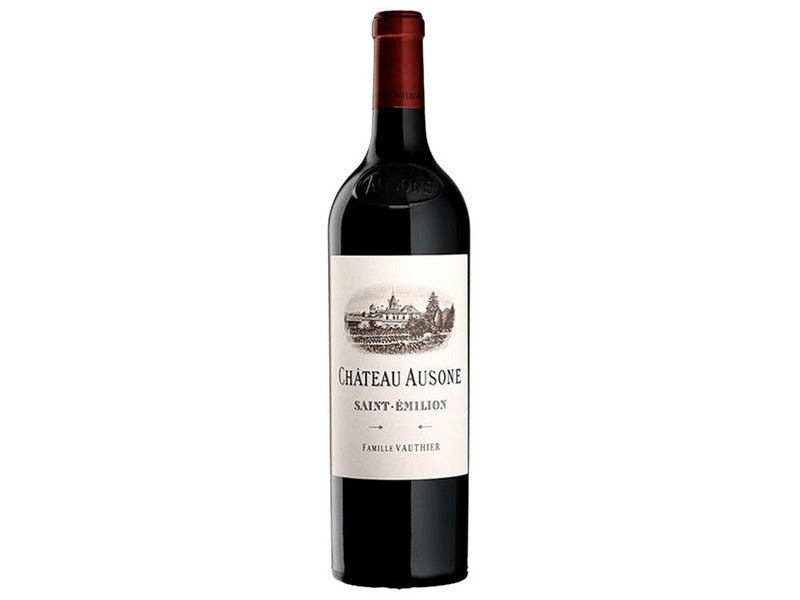
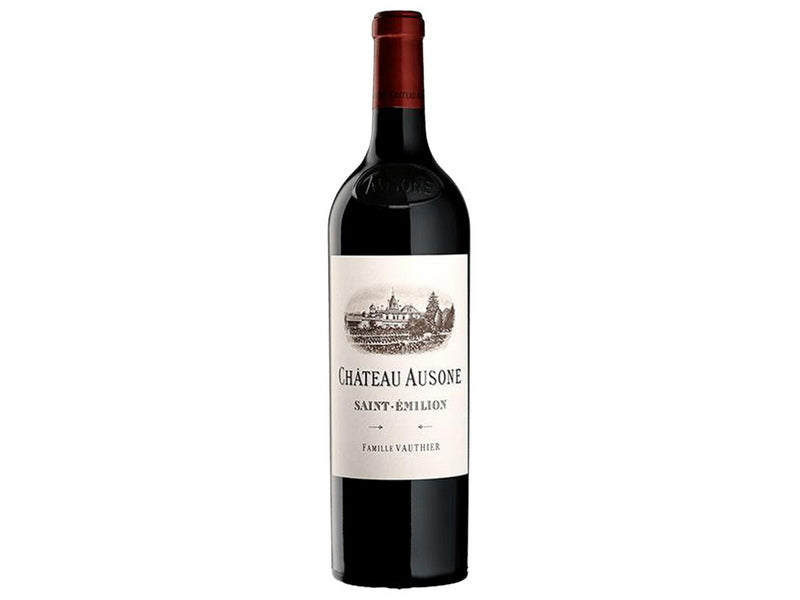
2025 Château Ausone, Saint‑Émilion
Fine Wine Library’s En Primeur notes list Ausone 2025 at 98–100 points, with a remark that it contains 65% Cabernet Franc and is “so fresh with super‑fine tannins.” The same source states that there is no second wine in 2025, underlining the concentration of quality into the Grand Vin. In practical terms, that means a very small volume of a very highly rated wine from one of the most coveted limestone sites on the Right Bank—a combination that tends to matter a great deal once the dust settles on the campaign.
2025 La Mondotte, 1er Grand Cru Classé B, Saint‑Émilion Grand Cru
La Mondotte is included among the 2025 En Primeur offerings on Bordeaux merchant platforms as a Premier Grand Cru Classé B Saint‑Émilion Grand Cru, underscoring its position among the appellation’s elite. Vintage summaries for 2025 point to strong performances from Saint‑Émilion’s top limestone sites, making La Mondotte another key name for collectors seeking concentrated yet precise Right Bank wines that are closely tied to their terroir.
2025 Clos Fourtet & 2025 Beau-séjour Bécot, 1er Grands Crus Classés B, Saint‑Émilion
Clos Fourtet and Beauséjour Bécot both sit on prime limestone terroir at the top of the Saint‑Émilion plateau and are repeatedly highlighted in professional reporting as benchmark 1er Grands Crus Classés B when the Right Bank performs well. In 2025, with analysts emphasizing the success of estates rooted in limestone and those that managed yields carefully, both châteaux are natural inclusions in any serious Saint‑Émilion 2025 allocation.
Pomerol: L’Eglise‑Clinet, Vieux Château Certan, La Conseillante, La Violette
Pomerol has again emerged as one of the strongest Right‑Bank zones in 2025, thanks to its mix of clay and gravel soils that handled the year’s heat while preserving freshness and structure. Within that context, our selection focuses on four of the appellation’s most talked‑about addresses.
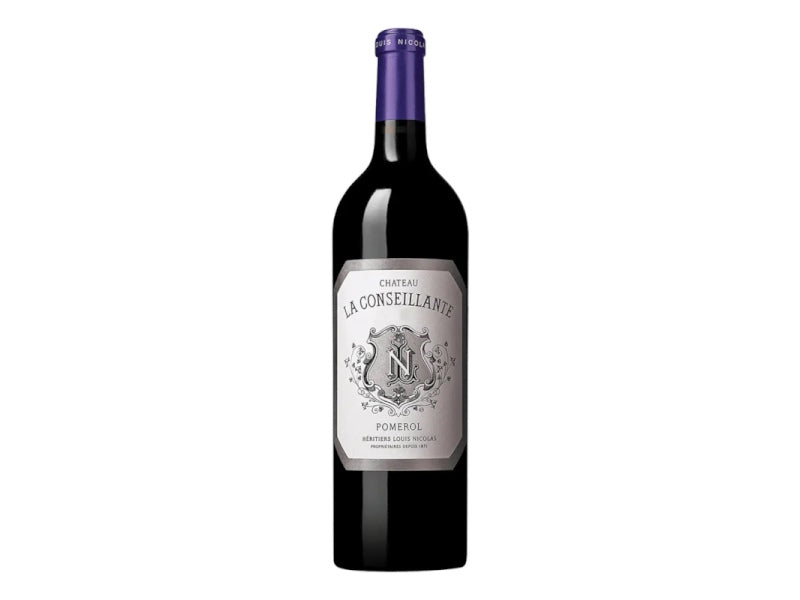
Fine Wine Library’s 2025 En Primeur report singles out Vieux Château Certan 2025 and La Conseillante 2025 with matching 98–100‑point ranges, calling VCC “next level” and quoting Alexandre Thienpont describing it as a blend “50/50 of 2020 and 2022,” and La Conseillante “wine of the vintage on the Right Bank,” noted for its incredible silkiness, violet and purple florals, white pepper and super‑fine tannins. Those are exactly the kind of phrases that tend to stick to a wine’s identity in the secondary market.
L’Eglise‑Clinet is consistently cited in high‑level 2025 overviews as one of Pomerol’s most serious, age‑worthy wines, with deep Merlot‑driven fruit and the capacity to age for decades. La Violette, meanwhile, remains one of Pomerol’s most limited and sought‑after micro‑cuvées, making 2025 La Violette a natural choice for collectors focused on ultra‑scarce, terroir‑driven bottlings in a strong Right‑Bank year.
Haut‑Brion Rouge & Blanc: First‑Growth gravitas on both colors
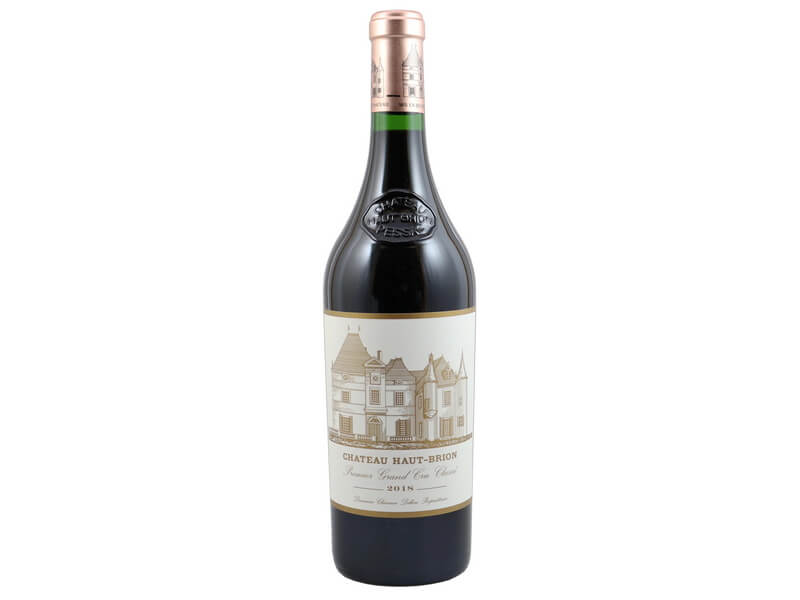
Château Haut‑Brion’s official 2025 En Primeur notes describe Haut‑Brion Rouge 2025 as an intensely colored, dark red wine with purple highlights and a first nose that is discreet, restrained and elegant—very much in line with the estate’s signature. On the palate, the tasting note emphasizes a precise, tightly woven structure and complex, acid‑tinged fruit that unfolds with volume and depth, suggesting a wine built for long ageing and slow revelation.
For Haut‑Brion Blanc 2025, the estate reports a bright, light yellow color and an immediately refined nose with white flowers (acacia, elderflower) and a touch of sweet spice. The palate is described as precise and dense, with citrus, gingerbread notes and a richness that reveals its depth gradually to “attentive and patient palates,” marking it as a wine with great potential. In a vintage where top white Bordeaux has clearly excelled, Haut‑Brion Blanc 2025 sits alongside Smith Haut Lafitte Blanc as one of the key dry whites that investors and collectors will be tracking closely.
Château Margaux 2025: Grand Vin, Pavillon Rouge, Pavillon Blanc
Château Margaux’s own June 2026 vintage release calls 2025 “a great vintage with exceptional qualities,” and notes that tastings during En Primeur week generated “real enthusiasm” among the nearly 1,700 professionals who visited the estate. The estate describes Château Margaux 2025 as very perfumed with great aromatic complexity, aligning with the château’s benchmark style.
For Pavillon Rouge du Château Margaux 2025, only 28% of the harvest was selected, while 35% went into the Grand Vin and a fourth wine, underscoring the strict selection behind the second wine. Pavillon Rouge 2025 is characterized as a long wine with beautiful freshness, where the expression “emphasizes the tannic structure a little more than the Grand Vin,” and the blend is 70% Cabernet Sauvignon, 16% Merlot, 10% Petit Verdot and 4% Cabernet Franc.
Pavillon Blanc 2025 is produced from 100% Sauvignon Blanc, with only 45% of the harvest retained for the final blend, again underlining the focus on quality over volume. In a vintage where both red and white have performed strongly, the full Margaux trio—Grand Vin, Pavillon Rouge and Pavillon Blanc—gives investors and collectors a complete, carefully calibrated exposure to one of the Médoc’s most revered estates.
Ducru‑Beaucaillou, Pichon Baron, Léoville Las Cases, Château Montrose: Left‑Bank blue chips
On the Left Bank beyond Margaux, our 2025 futures selection adds Ducru‑Beaucaillou, Pichon Baron and Léoville Las Cases, three estates frequently grouped as “super‑seconds” in strong vintages. Bordeaux 2025 reports underscore that the Médoc’s top Cabernet‑based wines—in Saint‑Julien and Pauillac in particular—benefited from the vintage’s balance of ripeness and freshness to produce deeply colored, structured but refined wines.
In such a low‑yield, high‑quality year, these three châteaux offer precisely the mix of pedigree, track record and critical attention that tends to underpin long‑term price resilience, especially when release prices are framed carefully against high‑scoring physical vintages like 2019 and 2020.
2025 Château Montrose, 2nd Classified Growth, Saint‑Estèphe
In a vintage already defined by low yields and high concentration, Château Montrose 2025 is emerging as one of the clearest Left‑Bank “buy” signals. Multiple specialist sources put it at the very top of the campaign: Frazier Jones lists a potential score range of 99–100, with The Wine Advocate at 98–100, while Bordeaux En Primeurs reports a string of top marks, including 100/100 from Yves Beck and Falstaff, 99–100 from Alexandre Ma, 98–100 from Giuseppe Lauria, 98 from Vert de Vin, 97–98 from James Suckling and 97 from Decanter. Fine Wine Library goes even further, calling Montrose 2025 “a perfect wine” and stating that “if there is one wine to buy from the campaign, make sure it is Montrose,” underlining its status as a potential reference point for the vintage.
Vintage context only strengthens that case. JN Wine’s Bordeaux 2025 report notes that the year was defined by prolonged heat and drought, very small berries, reduced juice‑to‑skin ratios and low yields typically in the 22–30 hl/ha range, and highlights Montrose as a clear example of how a brief 14 mm of rain at the right moment unlocked full phenolic maturity. At the same time, WineCap describes 2025 as a “low‑yield, heat‑shaped vintage” where the best estates produced wines with pronounced aromatics, silky tannins, brisk acidity and great ageing potential. In that environment, Montrose’s combination of extreme critical support, naturally restricted production and long‑proven track record makes the 2025 release one of the most compelling Left‑Bank positions for long‑term collectors and investors.
Why these 2025 futures, and why now
Looking across this expanded list, the logic is consistent:
-
Low yields and strict selections.
-
Smith Haut Lafitte 2025 red and blanc publish yields of 28 and 18 hl/ha; Pavillon Rouge and Pavillon Blanc retain only 28% and 45% of their respective harvests; Ausone has no second wine in 2025.
-
-
Top‑tier critical ranges.
-
Alignment with the macro cycle.
-
Analysts describe 2025 as a five‑star, low‑yield Bordeaux vintage arriving just as fine‑wine markets emerge from a multi‑year correction and return to growth, with buyers focusing on quality, value and blue‑chip names rather than chasing every release.
-
Our role at Symbolic Wines is to translate that into a concrete buying strategy. For 2025, that means concentrating capital on estates with proven terroir, documented scarcity and strong critical consensus—wines that will still matter when collectors look back at Bordeaux 2025 a decade or two from now.
Sources: Compagnie Médocaine des Grands Crus, Château Smith Haut Lafitte, Château Troplong Mondot, Bordeaux Tradition, 1jour1vin, Château Margaux, Château Haut-Brion, Fine Wine Library, WineInvestment.com, WineCap, Vinetur, WineNews, Vinous